

Chapter 3
1980 - Today
Many Voices. Many Forms
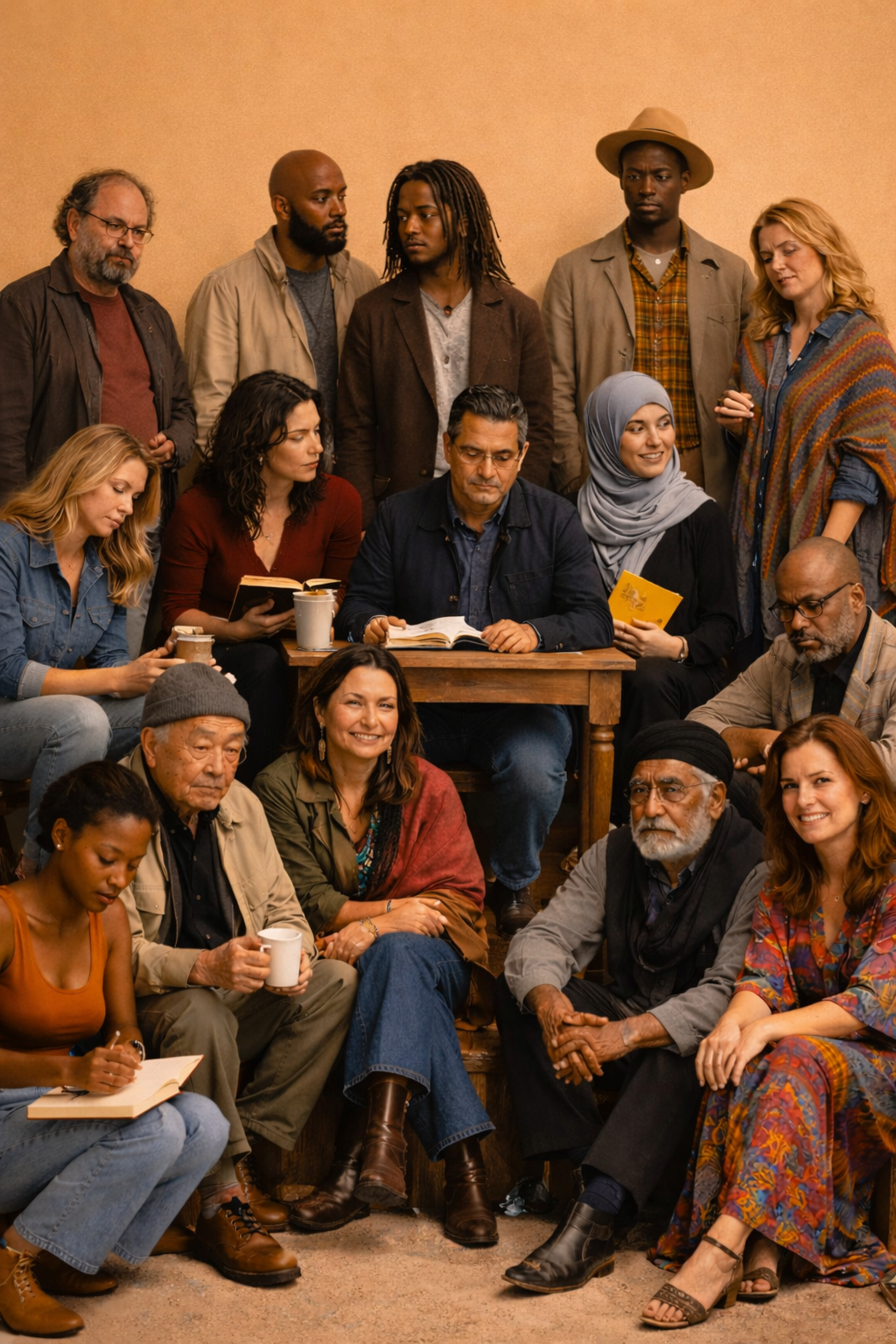
In the contemporary era, poetry no longer moves in unified schools or manifestos. Instead, it unfolds as a polyphony of voices, shaped by globalization, digital communication, and increasingly diverse cultural perspectives.
The poem becomes hybrid and the poet is free to move fluidly between form and intention in a post-modern explosion of potential.
Rather than seeking a single aesthetic direction, contemporary poetry embraces multiplicity.
Figures such as John Ashbery explore playful ambiguity and fluid meaning; Joy Harjo brings Indigenous cosmology and storytelling into modern verse; and Ocean Vuong blends migration, memory, and lyrical vulnerability into a new hybrid voice. And a sea of other voices chime in with cutting edge, individualized approaches that blend in a global chorus diverse, rich, and ever-evolving.
Scroll down for more
CORE FUNCTIONS
Diversity of Voices
Poetry no longer moves through singular schools or manifestos. Instead it unfolds as a diverse chorus of voices shaped by different identities, cultures, and lived experiences.
Hybrid Forms
Boundaries between genres dissolve. Poetry blends with memoir, essay, performance, visual art, and digital media, expanding the possibilities of what a poem can be.
Cultural Memory & Identity Exploration
Many contemporary poets explore migration, ancestry, language inheritance, and personal history, weaving private experience with collective memory.
Global Dialogue
Poetry increasingly reflects a globally interconnected world. Influences from different cultures, traditions, and languages intersect within the same poetic landscape.
POETIC ELEMENTS
Fluid Form
Poets move freely between structured verse, free verse, prose poetry, and experimental layouts.
Interdisciplinary Influence
Poetry engages with music, film, visual art, performance, and digital media.
Narrative-Lyric Hybrids
Poems often combine storytelling with lyrical intensity, blending personal narrative and poetic reflection.
Multiple Registers
Language shifts between conversational speech, literary tradition, cultural idioms, and multilingual expression.
-
There are SO MANY in this category so I’ll limit it to the my personal favourites for now and we will explore more as we go
Timothy Donnelly
Anne Carson
Kim Hyesoon
Richard Siken
Frederick Seidel
Mary Ruefle
Louis Gluck
Christian Bok
Terence Hayes
Dionne Brand